The sound of my wheelchair rolling down the driveway was the last thing I expected to hear. By the time I reached the window, my son was loading it into a stranger’s truck, smiling.
“Rodrigo!” I shouted. “What are you doing?”
“Selling it,” he answered without shame.
“That chair was custom-fitted. I can’t get downstairs without it.”
His girlfriend, Jessica, leaned against the truck. “We’re going to Cancún, Esperanza.”
Rodrigo shrugged. “You don’t go anywhere anyway.”
The buyer drove off with the chair. Rodrigo came inside only for his suitcases, leaving a water bottle just out of my reach. “There’s food downstairs,” he said.
“I can’t get downstairs.”
“You’ll figure it out. I also need the trust card.”
“No.”
“Fine, I already used the household one.”
He left. The door slammed.
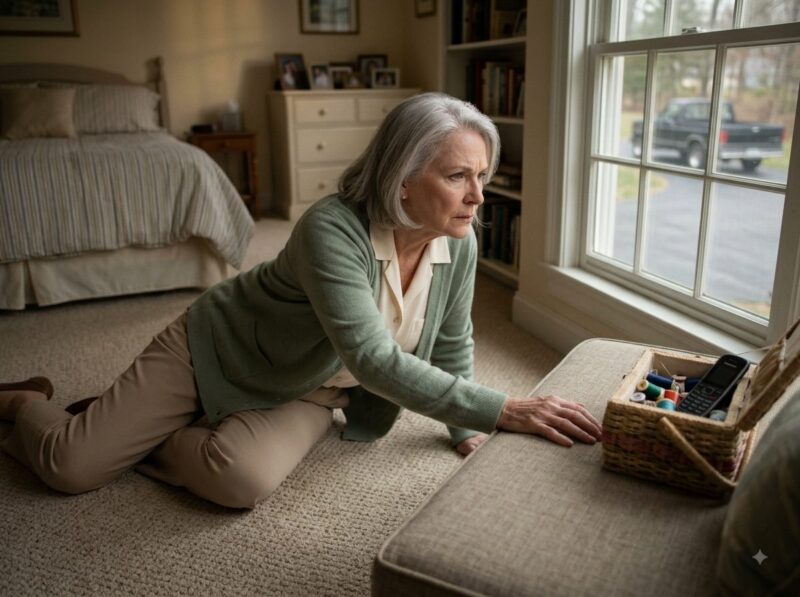
I dragged myself across the carpet to the window bench, where I kept an emergency phone hidden. I called attorney Marisol Rendón, who had managed my late husband’s trust for twenty-two years.
“Marisol,” I said, “activate the protection clause.”
There was a pause. “Are you sure?”
I watched the truck disappear beyond the gate.
“Completely sure,” I answered. “Do it now.”
Three years earlier, a spinal infection had taken most of the strength from my legs. Rodrigo moved in “to help,” and little by little took control of my groceries, my mail, my passwords, and my medical appointments. He told the neighbors I was confused. He told me I was lucky to have him.
Before the illness, I had spent thirty years building a regional hotel chain alongside my husband, Fernando. Rodrigo remembered the private schools and summer houses, but not the contracts I negotiated or the executives I fired. After Fernando died, I placed almost everything in a protected trust. Rodrigo called it “paperwork for old people.” He never read the clauses, and I never corrected him. That was deliberate.
What he never understood was that weakness and ignorance were not the same thing.
Marisol activated the clause that very afternoon: under the terms of the trust, any documented evidence of abandonment, neglect, or financial exploitation against me, the original beneficiary, allowed for the immediate freezing of all associated cards and the revocation of any access Rodrigo had as “auxiliary administrator” — a title I had given him years earlier, more out of family pressure than real trust.
With Marisol’s help over video call, I sent photographs of the room where Rodrigo had left me locked in, the water bottle out of my reach, and the text messages where he himself admitted to selling my wheelchair “because I don’t use it for anything important anyway.”
A locksmith arrived that afternoon and changed the locks on the whole house. A medical equipment supplier, contacted by Marisol, would bring me a new wheelchair — better than the old one — the next day. A social worker assessed my situation and formally documented the incident as a case of neglect against an elderly person with a disability.
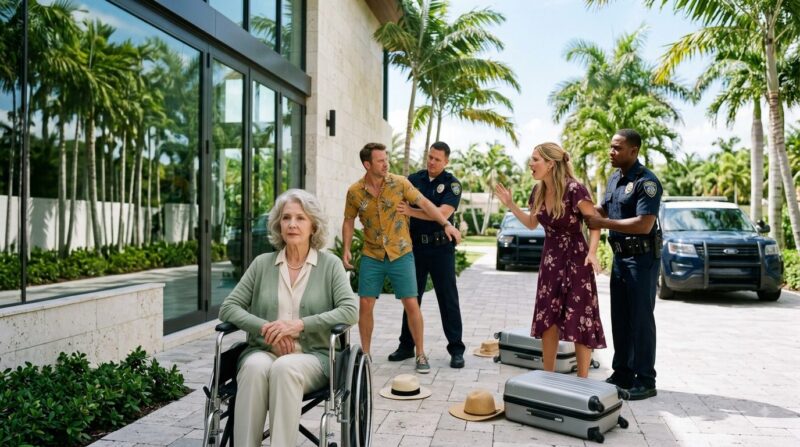
Six days later, when Rodrigo and Jessica returned from the airport, loaded down with suitcases and sunburns, they found the locks changed and no key that worked.
Marisol was waiting at the entrance, along with a police officer and the corresponding legal documents.
“Your cards linked to the trust were cancelled five days ago,” Marisol informed Rodrigo, perfectly calm. “And, according to the terms you yourself signed without reading, any attempt to enter this property without the express authorization of the beneficiary will be considered trespassing.”
“This is my house!” Rodrigo protested. “I’m her son!”
“It’s your mother’s house,” Marisol corrected. “You were never on the deed.”
Jessica, still in her swimsuit under her beach clothes, glanced at the suitcases by the door, then at Rodrigo, quickly calculating how much of that relationship was worth continuing without access to someone else’s credit card.
From the upstairs window, now with my new chair beside the bed, I watched the whole scene. I felt no joy. I felt, simply, relief — the kind that only arrives after carrying an invisible weight for far too long.
Rodrigo never returned to that house. I hired a full-time caregiver, someone who treats me with the dignity my own son forgot I deserved, and I took back full control of the hotel company I helped build, now run by a board of directors that respects, more than ever, every clause Fernando and I signed together so many years ago, thinking exactly of a day like this one.