My mother hadn’t eaten at a restaurant in months. As a child, Rosa loved going out to eat; she treated even an ordinary dinner like an occasion. But over the years, strangers had commented on her weight more times than I could count.
When her sixty-fifth birthday approached, I decided she wouldn’t spend another celebration hiding at home. “I’m taking you to dinner,” I told her. She protested, but eventually gave in. That night she got ready carefully.
“You look beautiful,” I told her.
“You’re required to say that,” she replied.
The first hour was perfect. She laughed more than I’d heard her laugh in months. She ordered tiramisu before the main course. “That’s what birthdays are for,” she said.
I noticed the woman at the next table staring, her eyes going from Rosa’s face to her plate and back. She leaned over and spoke loudly enough for several tables to hear. “Maybe skip dessert this time.”
My mother’s smile disappeared.
The kitchen doors swung open. The chef walked toward our table, stopped beside my mother, and looked at the woman. “You need to leave,” he said.
She laughed. “And who exactly are you?”
He turned to an employee. “Lock the door.” The bolt clicked. Then he turned to my mother.
“Rosa?” he said.
My mother froze, her purse slipping from her hands.
“Emilio?”
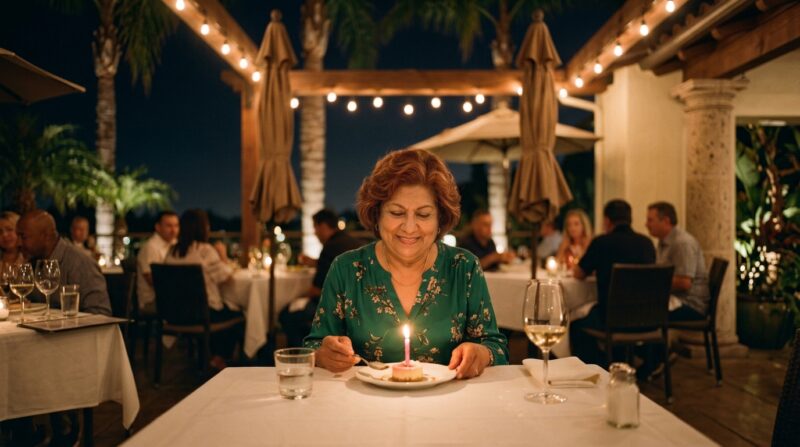
The way he said her name told me instantly they weren’t strangers. Emilio slowly crouched beside her chair.
“I thought that was you.”
“You work here?” my mother asked.
“I own it.”
They’d met working together at a diner more than forty years earlier, long before I was born. According to Emilio, my mother had changed his life.
“I was twenty-two. Broke, inexperienced, convinced I’d become a chef someday.”
“You were talented,” my mother interrupted.
“I was also stupid.”
“That too.”
When no one else believed in him, my mother did. She tasted the dishes he experimented with after closing. She encouraged him. She convinced the owner to give him time in the kitchen.
“You were the first person who made me believe I belonged there.”
Shortly after that, Emilio got fired after arguing with the owner and throwing a pan (which, according to him, “landed nearby, didn’t hit him directly”). My mother helped him find another job.
“Anyone would have,” she said.
“No,” Emilio replied quietly. “They wouldn’t have. I never forgot.”
The woman at the next table, apparently tired of waiting, grabbed her purse.
“This reunion is lovely, but I’m leaving.”
Emilio nodded to the employee. The door unlocked. But before leaving, the woman turned to my mother.
“I still think people shouldn’t get offended when someone tells them the truth.”
My mother stood up. For years I’d watched her avoid confrontation, pretend cruel comments didn’t affect her, slowly disappear from places she used to enjoy. This time she didn’t shrink.
“You don’t know anything about my health,” she said, looking straight at her.
“I can see enough.”
“No. You can see my body. That isn’t the same thing. You don’t know what medication I take. You don’t know what I’ve been through. You don’t know what my doctor says. You don’t know anything about my life. And even if you did know everything, publicly humiliating a stranger wouldn’t make you helpful. It would just make you cruel.”
No one in the restaurant defended the woman. She muttered something, turned around, and left. The door closed behind her.
My mother sat down immediately, hands trembling. I took her hand.
“You were incredible.”
“I was terrified,” she laughed, eyes filling with tears.
“You can be terrified and brave at the same time.”
Emilio pulled out the empty chair beside us. “May I?”
My mother nodded. After a moment of silence, he looked at the half-finished tiramisu.
“Is that all you ordered?”
“It came before dinner.”
“I’m sixty-five,” my mother shrugged.
“That definitely sounds like you.”
I looked around. “Is this really your restaurant?”
“For twenty-three years.”
My mother slowly studied the room. “You actually did it.”
“Eventually.”
Emilio pointed to the wall behind us. Several framed photographs hung under the warm lights. One showed a much younger Emilio standing in a cramped kitchen. Beside him, a young woman with thick brown hair and a huge smile. My mother.
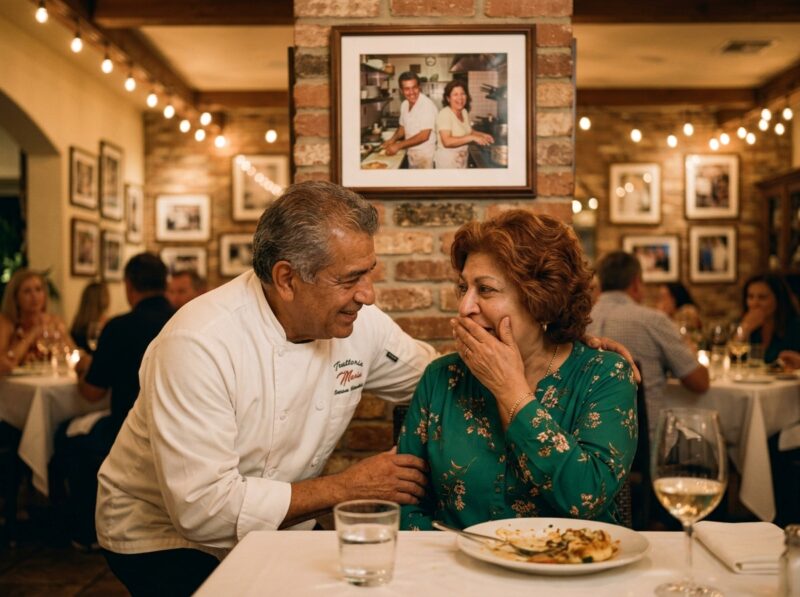
Below the photograph was a small brass plaque: “FOR ROSA, WHO TOLD ME I BELONGED IN A KITCHEN BEFORE I BELIEVED IT MYSELF.”
“You kept this?” my mother asked, eyes filling with tears again.
“Of course.”
“You never told me.”
“You disappeared.”
“Life happened,” my mother looked down.
“I know,” Emilio said, glancing toward the kitchen. “Give me five minutes.”
“For what?”
“Your actual dinner.”
Minutes later he returned carrying the plate himself: fresh pasta, roasted vegetables, bread, and — alongside everything else — another slice of tiramisu.
My mother covered her face. “Emilio, I already had dessert.”
“Maybe don’t skip dessert this time,” he said, smiling.
The whole restaurant burst into laughter. My mother laughed too — not the nervous little laugh she’d learned to use when uncomfortable, but a real laugh, until tears rolled down her face. Then she picked up her fork and took another bite.
On the drive home, she stayed quiet for several minutes. Finally she said:
“Camila, I meant what I said earlier. Maybe I should go out more often.”
“I’d really like that.”
“So would I,” my mother smiled.