My twin sister died ten years ago in a car accident.
Or so I believed.
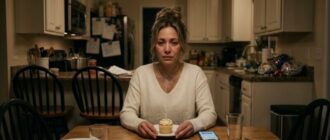
My name is Lucía. Last Monday I was at home with my coffee half-finished when the phone rang. It was a dental clinic. They were asking me to come and collect my sister.
I told them my sister had died ten years ago.
There was silence. Then they said they would put her on.
“Lucía. Please come and get me.”
I froze.
That voice. Ten years trying to forget what it sounded like. Ten years buying two cups of coffee without knowing why. Ten years visiting a grave every anniversary.
“Where are you?”
She gave me the address.
“Don’t move.”
I grabbed my keys and ran.
Valentina and I were twenty when she “died.” Her car left the road at night, rolled down an embankment, and caught fire before the emergency services arrived.
We buried a closed coffin.
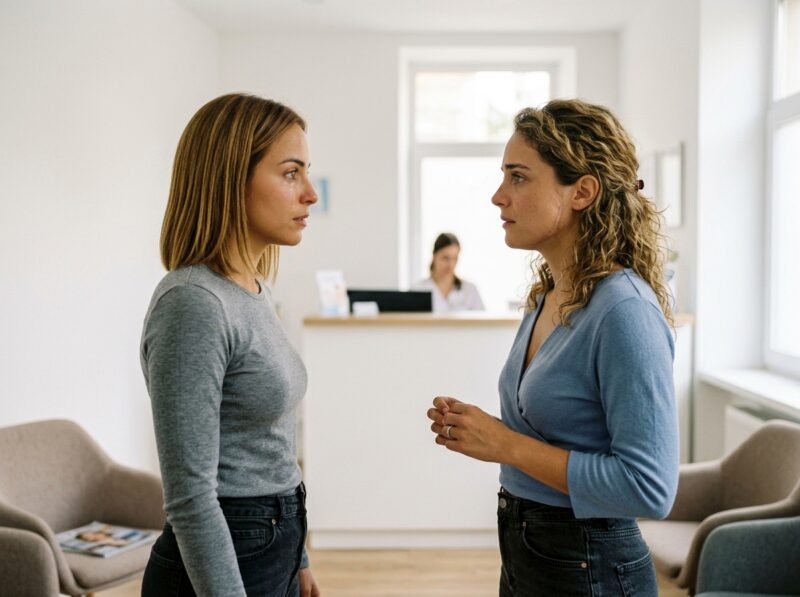
When I pushed through the clinic door, a woman slowly rose from a chair at the back.
I stopped.
Her hair was shorter. A pale scar curved along one side of her jaw. But her eyes were exactly the same. And she was twisting a silver ring between her fingers in precisely the way Valentina used to twist her bracelets when she was nervous.
“Hi,” she whispered.
I stared at her.
“Don’t just say hi.”
“What did we call the dent in my bedroom wall?”
Her eyes filled with tears immediately.
“The moon.”
“Who broke Mum’s vase in the blizzard of ninety-nine?”
“I did. You took the blame because Dad said he’d ground me and I wanted to go to Marta’s birthday.”
My knees nearly gave out. It was Valentina. And that certainty made me feel worse, not better.
“How are you alive?”
“I survived the crash.”
“We buried you.”
“The coffin was empty.”
“Mum puts flowers on your grave.”
Valentina closed her eyes.
“Dad hasn’t driven that stretch of road.”
“How do you know that?”
She opened her eyes. And in that moment I understood that Valentina being alive was not the only secret waiting for me.
She asked me to take her to her apartment. I recognised the town when she gave me the address.
“That’s two towns away.”
“I know.”
“You’ve supposedly been dead for ten years and you’re living two towns away.”
I drove in silence. When we arrived, another part of me broke. This was not a temporary room. It was a home. Plants in the windows. Photographs on the shelves. A yellow mug beside the sink. Valentina had preferences. Routines. Friends. A life.
And there was not a single photograph of me.
“How long have you lived here?”
“Three years.”
“Start with the accident.”
Valentina sat down.
“I was thrown from the car before it caught fire. Another driver found me miles away near a different road. No identification. No memory. I knew how to use a spoon before I knew my last name.”
The memories came back gradually. Fragments. Mum’s yellow kitchen. My voice. Places from childhood.
“When did you remember me?”
Valentina looked away.
“Six years.”
I stared at her.
“You knew I thought you were dead?”
“Yes.”
“Did you call?”
“I tried once. Mum and Dad’s number had been disconnected.”
“And then?”
“I wrote letters.”
“Did you send them?”
She lowered her eyes.
“No.”
I picked up my bag.
“Then those letters weren’t for us, Valentina. They were for you.”
And I walked out.
That night I opened a drawer and found the two blue mugs. One for me. The other, “the spare.” I had spent ten years buying things in pairs because some part of me had never accepted being alone.
The next morning I called Mum.
“Are you sitting down?”
“Lucía, you know I hate when you start like that.”
“Please, Mum.”
“All right.”
“Valentina is alive.”
Complete silence. Then a whisper.
“Sweetheart…”
“I’ve seen her. She remembers the moon in my wall. Dad’s vase. It’s really her.”
Dad came on the phone and simply said:
“What do you need from us?”
That nearly broke me.
Two days later I took my parents to the apartment. Mum stopped as soon as we entered. Valentina was standing near the window. Nobody moved. Then Mum crossed the room.
“My baby.”
Valentina collapsed into her arms. Dad stayed a few steps back, wiping his eyes.
When everyone had calmed down, Mum started talking fast, desperate to rebuild ten years in minutes.
“I still make that cherry pie you always loved. Your old room could be painted blue again. Do you remember the song you girls used to sing?”
Valentina stiffened.
“Stop.”
“Valentina?”
“Please stop. This is exactly why I didn’t want to come back.”
“Because I mentioned pie?”
“Because five minutes after seeing me, you’re already trying to rebuild the girl I used to be.”
“But Lucía always loved it too. You girls always wanted the same things.”
Valentina gave a short, bitter laugh.
“There it is. Exactly that.”
She turned to me.
“Growing up, everything was Lucía and Valentina. If you got a better grade, they compared us. If you won something, everyone looked at me like I was the defective version. You walked into a room and got to be Lucía. I walked into the same room and became Lucía’s twin.”
“I never asked anyone to do that.”
“I know. But you never had to think about it.”
Mum was crying.
“I never knew you felt that way.”
“Neither did I completely. Not until after the accident.”
When she lost her memory, for the first time nobody compared her to me. Nobody asked where her twin was. She began discovering things simply because she enjoyed them. Gardening. Different foods. A life that didn’t have me as a reference point.
“So when you remembered us, you decided to stay a ghost.”
“At first I was frightened. Afterwards… I chose myself.”
“You chose yourself by letting us bury you?”
“I know how terrible that sounds.”
“It sounds terrible because it was terrible.”
“I loved you all. But I was terrified that if I came back, I’d stop being Valentina again.”
“And the price of being Valentina was letting me spend ten years believing my sister was dead.”
She wiped her cheeks.
“I looked you up four years ago. I saw your house, your job, your friends.”
“And because it looked like I was happy, you stayed away?”
“You don’t have the right to disappear again,” I said. “And I don’t have the right to drag you backwards. We start small. You don’t disappear. You don’t decide for me. Mum and Dad get to be angry too.”
“All right.”
I picked up my bag.
“Lunch. Thursday.”
Rebuilding the relationship with Valentina was not dramatic. We started with one meal. Then another. Then coffee. I learned she now drank more tea than coffee. She liked gardening. She hated cherry pie. She had friends whose names meant nothing to me but who had been beside her during years I spent grieving her.
One afternoon, Valentina apologised to Dad. He stared at her for a long time. Then he said:
“I’m glad you survived.”
She started crying.
“But I’m angry you let us believe you didn’t.”
“Both things can be true.”
Those words stayed with me. I could love her and still resent what she had done. Neither truth cancelled the other.
Three weeks later I stopped at a bakery. The cashier recognised me.
“The usual? Two almond croissants?”
I stared at the display. Ten years of buying pairs. Two mugs. Two pastries. A private ritual of grief I had never realised I was performing.
“No. Just one almond.”
Then I saw a chocolate croissant. Valentina had ordered one the week before.
“And one of those too.”
Two separate bags. One almond. One chocolate. Different.
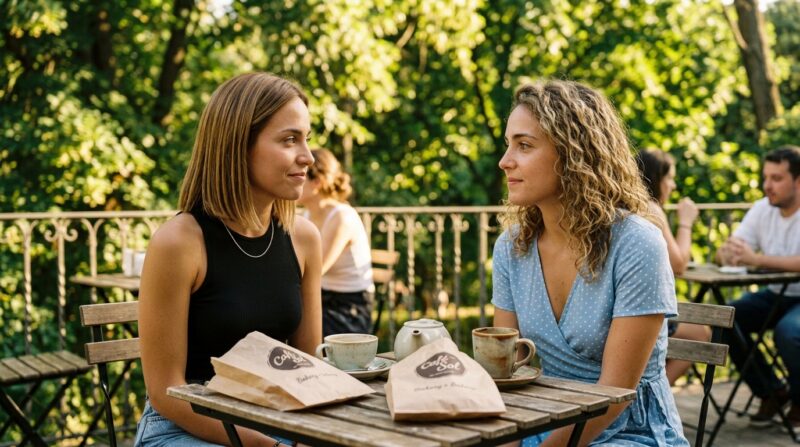
When I reached the café, Valentina was already outside. She opened her bag.
“Chocolate?”
“You ordered it last week.”
She smiled.
“You remembered.”
I sat across from her. For the first time, neither of us had chosen the same thing. She had chocolate. I had almond. Two different people at the same table.
And for the first time in our lives, neither of us needed to disappear for the other one to exist.