Nobody in the village understood why old Marta climbed onto the roof every day with her mallet and her birch stakes.
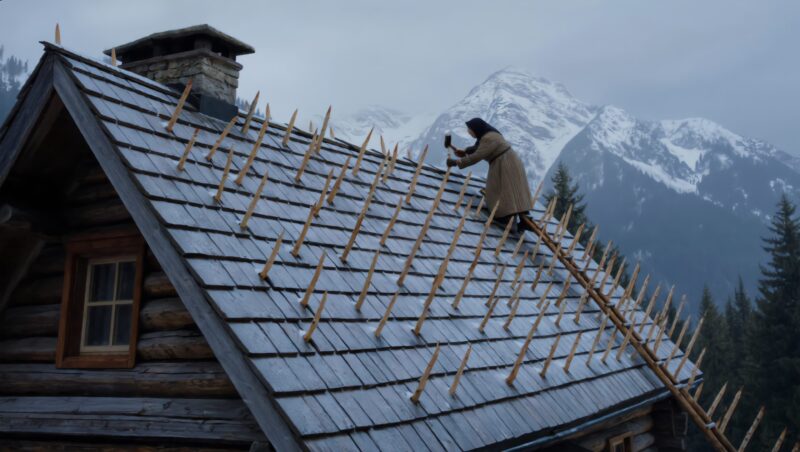
She had been doing it for weeks. With her frayed gloves, her black headscarf dusted with snow, driving stake after stake into every board of the roof. One by one. With a calm that was more unsettling than any urgency.
The neighbors would stop at the fence and laugh.
— Look at that! She’s hammered stakes all over the roof! What are those things even for? The old woman has gone crazy! — Boris, the loudest man in the village, would shout.
— My God, he’s right! The whole roof is covered in sticks! — his wife would reply between fits of laughter.
Marta didn’t listen. Or perhaps she did, and simply didn’t care.
She was watching the mountains. And kept driving stakes.
Nobody in the village could remember exactly when it had started. Perhaps at the end of October, when the first snows covered the peaks. Perhaps earlier. Marta had always been difficult to observe — not because she hid herself, but because people simply didn’t look at her with any attention.
She was a woman in her seventies who lived alone in the log cabin at the edge of the village, the same cabin where she had been born, where she had raised her children, where she had buried her husband. A small woman, with a deeply lined face and blue-grey eyes the colour of a January sky. Silent. Self-sufficient. The kind of person others take for granted until one day they are simply gone.
But that winter, Marta did something nobody could ignore.
Every morning, before the village was fully awake, she took out her wooden ladder — handmade, heavy, rough — and leaned it against the wall of her house. She climbed slowly, without hurrying, with the quiet confidence of someone who knows every rung by memory. She carried her iron mallet and a bag of birch stakes she carved herself by the fire each night.
The stakes were peculiar. Thick as an adult thumb, about fifteen centimetres long, with the tip hand-sharpened into a clean cone. Pale birch wood, almost white, with the natural grain visible. Not nails. Not anything the neighbours had ever seen on a roof before.
And she drove them into every board, every row of shingles. One beside the other. The point always facing up.
By the time the village woke and the first neighbours stepped out for firewood or water, Marta was already on the roof, hammering with that calm of hers that was almost hypnotic. Strike. Pause. Strike. Pause. As if she had all the time in the world. As if the cold did not exist.
It was Boris who started the jokes.
— Look at that! She’s hammered stakes all over the roof! What are those things even for? The old woman has gone crazy! — he would announce each morning from the fence, with the satisfaction of someone who has found free entertainment for the whole week.
The neighbours would gather. They would laugh. Boris’s wife would cover her mouth with her hand and say the whole roof was full of sticks. The blacksmith’s son asked if the old woman was trying to scare away birds. Someone suggested she had perhaps lost her mind from living alone too long.
Marta did not answer. She did not look at them with anger. She looked at them, sometimes, with a kind of stillness that was more unsettling than any reply — the look of someone who knows something others do not, and has decided it is not worth explaining.
And kept driving stakes.
That afternoon, the sky changed.
Nobody saw it coming exactly, because the mountain sky in winter always carries clouds. But this time it was different. These were not clouds that gathered from below — it was a wall. A dense white mass that began sliding down from the peaks toward the valley, swallowing first the summits, then the line of fir trees, then the most distant houses. It was not falling. It was descending. Like an avalanche of air and compacted snow moving down the slope with a slowness that was, precisely because of that, terrifying.
Boris was the first to stop laughing.
From the fence, he watched the white wall swallow the forest. He watched it advance toward the village. And he saw, at the top of the ladder, the small and motionless silhouette of Marta — who had stopped hammering and was looking at the mountains with her arms still at her sides.
Not with fear.
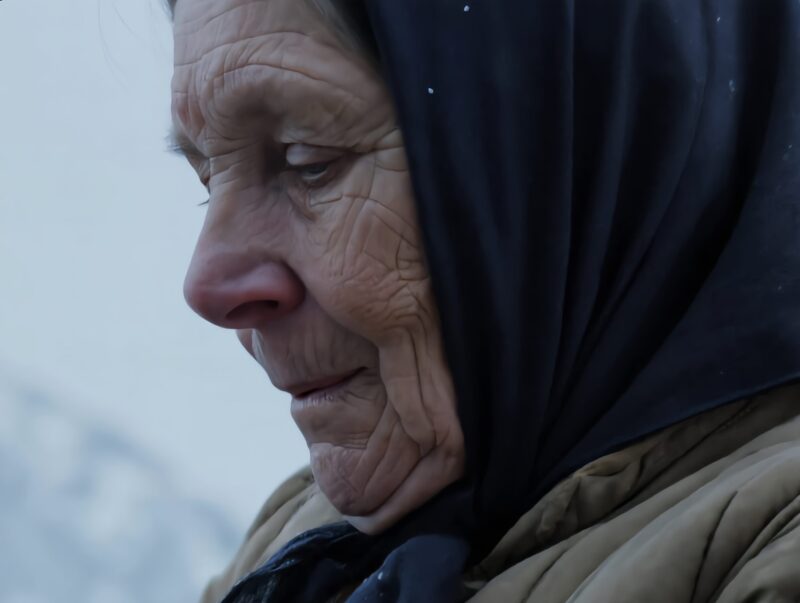
With recognition.
As if she had known exactly when it would arrive.
The storm struck the village with a force that no one in that generation would ever forget. Three days of wind and horizontal snow that tore off roofs, collapsed barns, and buried entire fences under metres of white. When it finally eased and the village could step outside, the first thing they saw was Marta’s roof.
Intact.
Every board in place. Every row of shingles firm under the weight of the snow. The birch stakes — dozens and dozens of them, points facing up — had acted as anchors, locking the shingles together, preventing the wind from tearing them away one by one.
It was not madness.
It was the knowledge of a woman who had lived through seventy winters in those mountains and understood, better than anyone, what was coming.
Boris took three days to go and ask her to teach him.
Marta opened the door, put a cup of tea in his hand, and without saying a single word, handed him a mallet and a bag of freshly carved stakes.