My mother looked at my twelve-year-old daughter and said: “We all voted and you’re the least favourite grandchild.” The whole family laughed while my daughter stood silently trying not to cry in the corner. It was the last time I stayed quiet.
My name is Elena. The Christmas dinner at my mother’s house had already gone on for too long.
My daughter Sofía had spent the afternoon helping in the kitchen, carrying plates, refilling glasses, trying to stay out of everyone’s way. She was quieter than her cousins. Less interested in performing for adults. And perfectly aware that my mother, Pilar, had always preferred my sister’s children.
But I never expected her to say it out loud.
Pilar tapped her wine glass with a fork and smiled around the table.
“We’ve all voted,” she announced, “and you are the least favourite grandchild.”
For a second I thought I had misheard. Then everyone laughed.
My sister Carmen covered her mouth. Her husband snorted. My uncle Ramón laughed as if it were the cleverest joke he’d heard all year.
Sofía did not laugh.
She was standing by the sideboard, still holding an empty serving dish. Her face went blank in that terrible way children do when they’re trying not to cry in front of adults.
I stood up.
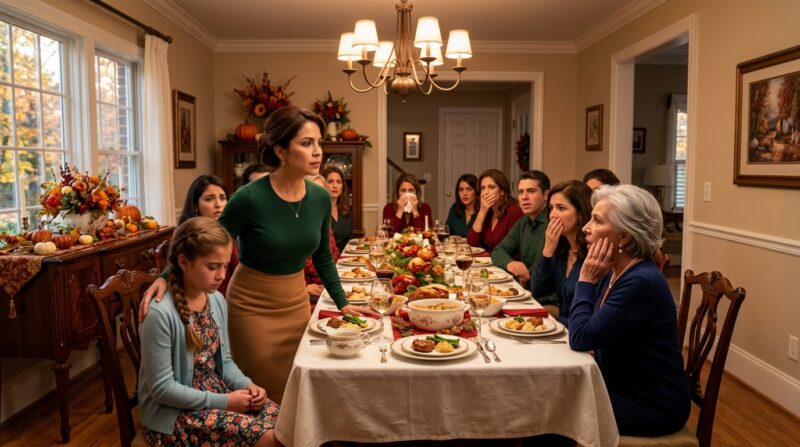
My chair scraped hard against the wooden floor.
“No,” I said. “A joke is funny to the person the joke is about.”
The room went quiet.
I looked at my mother first. Then at everyone who had laughed.
“And since this family apparently likes voting so much, I’ve made a decision too.”
Carmen frowned. “Elena, don’t make a scene.”
“I’m not making one. Mum already did.”
I walked over to Sofía, took the dish out of her hands and put my arm around her shoulders.
“Starting tonight, Sofía and I are done attending family gatherings where humiliating a child is considered entertainment.”
My mother’s smile disappeared.
“You’re seriously leaving over this?”
“I’m leaving because none of you stopped it.”
Then I reached into my bag, took out the spare key to my mother’s house and placed it beside her plate.
“And one more thing. Mum, the money you’ve been calling your ‘safety cushion’. The five hundred euros I transfer to you every month because you said you couldn’t cover your health insurance and the building fees. That ends today.”
The whole table froze.
My mother stared at the key. Carmen’s face changed immediately.
“What money?”
Pilar went pale.
I finally understood why. Nobody else at that table knew I had been supporting her for nearly three years.
Sofía looked up at me, not fully understanding what had just happened.
I squeezed her shoulder.
“Go and get your coat, sweetheart.”
Behind me, my mother whispered: “Elena, wait.”
But this time I didn’t.
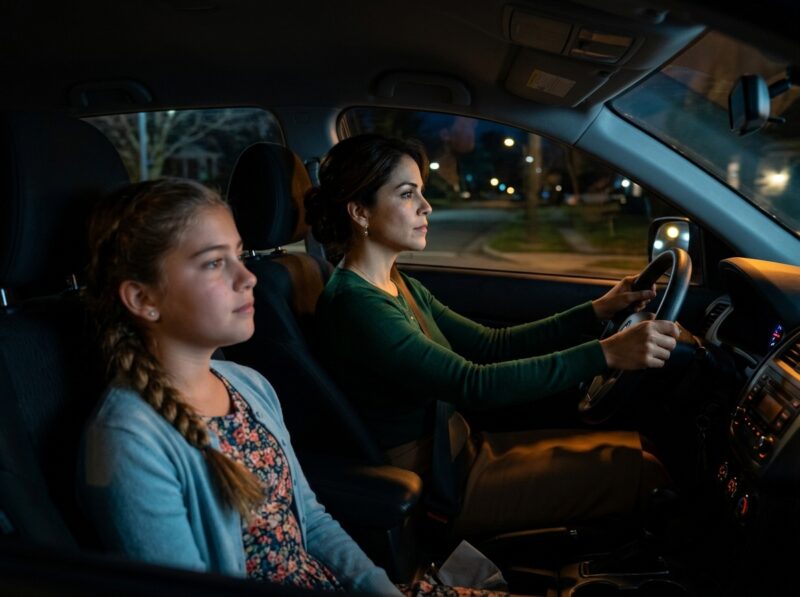
In the car, Sofía was quiet for the first few minutes. Then she asked me:
“Are you angry?”
“I’m all right.”
“Is Grandma going to be all right?”
I glanced at her. Twelve years old. Worried about the grandmother who had just humiliated her in front of the whole family.
“Grandma needs to learn that her words cause pain. That’s not your responsibility.”
Sofía nodded slowly.
“Are they all going to be angry with you?”
“Probably.”
“Does it matter to you?”
I thought about the answer for a second.
“What matters more to me is that you know I will never sit quietly while someone hurts you. Even if that someone is family.”
Sofía looked out of the window for a while. Then she said, very quietly: “Thank you, Mum.”
The messages started that same night.
Carmen was first. She called three times before sending me a written message: “Why didn’t you tell us about the money? Mum says you’re making it up.”
I replied with thirty-six months of bank statements.
It took her four hours to respond.
“I didn’t know.”
“I know. That’s why I didn’t leave without saying it.”
My uncle Ramón sent me a voice message telling me the reaction had been disproportionate and that Pilar was getting older and sometimes said things without thinking.
I didn’t reply.
My mother didn’t message me that night. She wrote three days later.
A short message: “I need to talk to you.”
I replied that we could talk, but that Sofía would not be part of any conversation until there was a real apology — not the kind that begins with “if you felt hurt.”
My mother took two more days before sending this:
“I know what I said was wrong. I have no excuse. I’m sorry, Elena. And I owe Sofía an apology too.”
I read it three times. Then I showed it to Sofía and asked if she wanted to meet Grandma so she could say it in person.
Sofía thought about it.
“Yes. But somewhere that isn’t her house.”
We met at a neutral café on a Wednesday morning.
My mother arrived looking exactly like someone who hadn’t slept well in a week. She sat across from Sofía and said what she needed to say.
It wasn’t a perfect apology. It was the kind a person who isn’t used to making them gives when they try anyway.
Sofía listened. Then she said:
“All right. But don’t say that to me again.”
“I won’t.”
“Do you promise?”
My mother looked at her. “I promise.”
Sofía nodded. Picked up her hot chocolate. And changed the subject to talk about a book she was reading, with that ease children have for closing a door and keeping walking.
Adults take much longer to do that.
As for the five hundred euros a month: I spoke with Carmen that same week. We agreed that our mother’s real needs would be covered jointly, with transparency, and without either of us carrying it alone in silence.
That was also new.
I don’t know whether next year’s Christmas dinner will be different.
What I do know is that Sofía asked me something a few days ago, while we were making dinner:
“Mum, do you always stand up when someone does something like that?”
“I try to.”
“What if it’s frightening?”
“It’s frightening anyway.”
Sofía stirred the pot in silence for a moment.
“Good,” she said finally. Just that.
And it felt like enough.